
Common Indoor & Outdoor Plant Pests
Sticky leaves, fine webbing, discolored foliage, or chewed leaves can signal a pest problem. Use this guide to recognize common signs, then identify the pest before choosing a treatment. Watering, light, and disease problems can cause similar symptoms.
 Photo source: A-Z Animals
Mealybugs
White, cottony clusters often collect where leaves join stems and along leaf veins. These sap-feeding pests can cause yellowing, weak growth, and sticky residue.
 Photo source: WVU Extension
Scale insects
Scale often resembles small brown or tan bumps attached to stems, branches, or leaves. Heavy infestations weaken growth; soft scales produce sticky honeydew, while armored scales generally do not.
 Photo source: University of Minnesota Extension
Spider mites
Tiny mites can cause pale speckling, bronzing, and fine webbing on foliage. Check leaf undersides closely; these pests are arachnids and can be difficult to see without magnification.
 Photo source: BugGuide
Thrips
Small, slender insects feed on leaves and flowers, leaving silvery streaks, distorted growth, or dark waste specks. Inspect buds, unfolding leaves, and flower petals for damage and moving insects.
 Photo source: NC State Extension
Fungus gnats
Tiny dark flies around damp potting mix are often fungus gnats. Adults are mainly a nuisance; larvae live in the mix and can injure roots, especially in seedlings and young plants.
 Photo source: Mushinavi
Aphids
Soft-bodied insects cluster on tender shoots, buds, and leaf undersides. Feeding can curl new growth and leave sticky honeydew that attracts ants and supports sooty mold.
 Photo source: Utah State University Extension
Whiteflies
Tiny white insects gather beneath leaves and may flutter up when the plant is disturbed. Their feeding can cause yellowing, reduced vigor, and sticky honeydew.
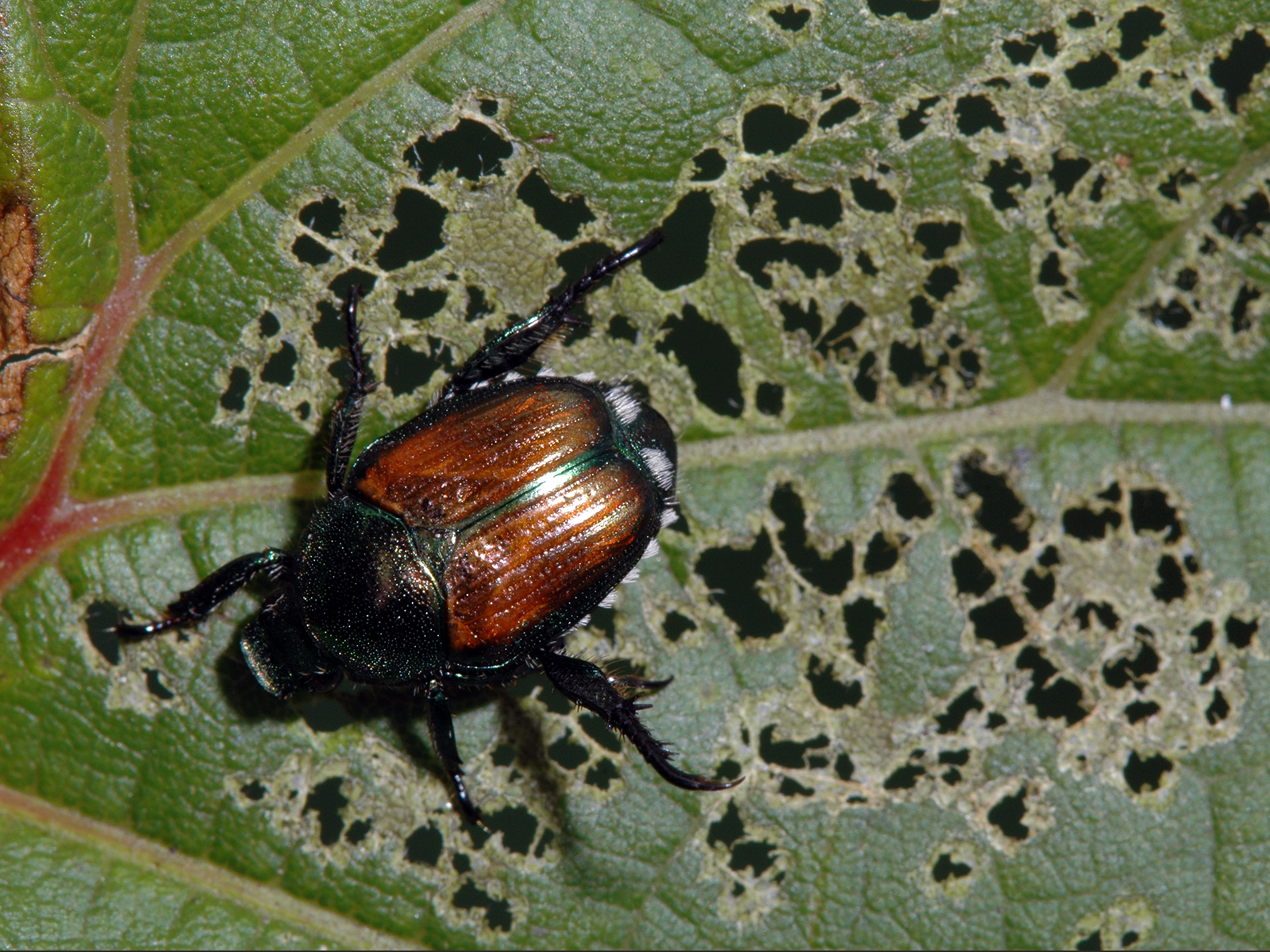 Photo source: University of Minnesota Extension
Japanese beetles
Metallic green beetles with copper-colored wing covers chew flowers and leaf tissue between the veins. Roses, grapes, and many other landscape plants can develop a lace-like pattern of feeding damage.
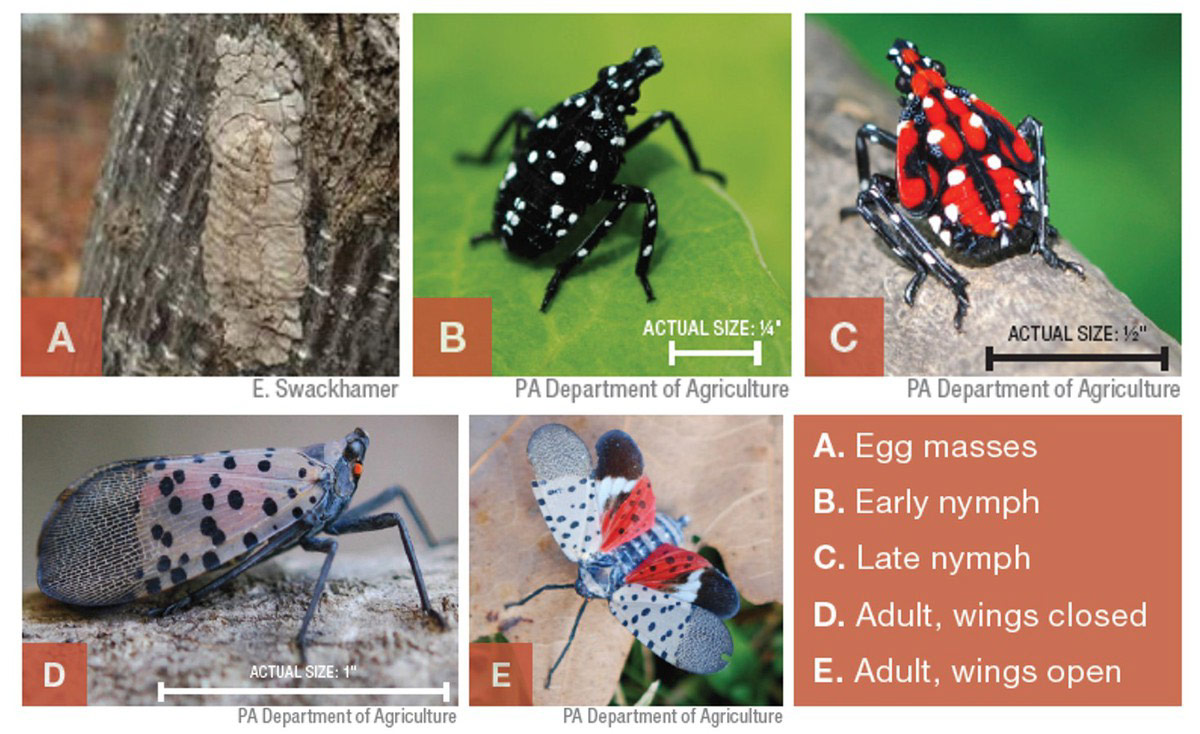 Photo source: Northeastern IPM Center; photo credits shown in graphic
Spotted lanternflies
Early nymphs are black with white spots; later nymphs add red markings, and adults have spotted forewings and red hindwings. This invasive sap-feeding pest leaves honeydew and can be especially damaging to grapevines.
What to do if you spot a pest
Indoors: Separate the affected plant when practical and inspect nearby plants. Photograph the whole plant, leaf undersides, stems, and any visible pests.
Outdoors: Identify the insect before taking action. Beneficial insects such as lady beetles and lacewings help manage pests, and minor feeding damage does not always require treatment.
Treatment should match the pest, plant, and location. Follow product labels and check plant sensitivity before using any treatment.
Need help identifying the problem?
Send Nick clear photos, your plant’s name if known, whether it grows indoors or outdoors, and when you first noticed the problem.
Ask Nick — Plant Doctor →